A listing shows one number. A purchase has several. Between the price on the page and the keys in your hand there are taxes, a notary, a land registry, usually a lawyer, often an agent, and sometimes a legal interpreter.
Together, these add a noticeable share to the price. For a home listed at €250,000, an extra 8% to 13% means €20,000 to €32,500. It helps to know the shape of that sum before you fall for a place.
This article is a map, not a quote. It lists the usual items and shows how four coastal countries count them. Rates change and depend on the region, the type of property and your own situation, so use it to ask better questions.
IN SHORT
- Beyond the listed price, a purchase brings taxes, notary and land registry fees, legal help and often an agent’s fee.
- For a home listed at €250,000, an extra 8% to 13% means €20,000 to €32,500.
- The transfer tax or VAT is usually the largest single item and differs most from country to country.
- A local lawyer checks the title, debts, permits and the contract; bring a legal interpreter if you do not speak the language.
The usual items on the list
The tax on the transfer
In most countries, buying triggers either a transfer tax or VAT. It is usually the largest single item, and it is the one that differs most from place to place.
The notary and the registry
The notary prepares and certifies the deed. The land registry records you as the owner. Both charge fees, often linked to the value of the property.
Legal help
A local lawyer checks the title, any debts on the property, the permits and the contract. If you do not speak the language, you will also want a legal interpreter, so that you understand every page you sign.
The agent
Agent fees depend on the country and on the contract. In some places the buyer pays, in others each side pays its own agent.
Resale or new build: the tax follows the sale
The same house can be taxed in two different ways. A resale usually carries a transfer tax. A new home sold by a developer usually carries VAT instead, and in some countries a smaller stamp duty on top. In Croatia, the tax authority states that the transfer tax does not apply to property whose sale is liable to VAT.
Ask early which route your property takes. The difference in cost can be large.
Four coasts, four ways to count
Spain
On a resale, the transfer tax (ITP) is set by each region. Madrid charges 6% and Andalucía 7%, while Catalonia starts at 10% and rises with the price. A new build pays VAT, generally 10% on a first sale by a developer, plus a stamp duty (AJD) set by the region.
Notary, registry and gestor or lawyer fees come on top. One guide quotes about €600 to €1,200 for the notary, €400 to €1,000 for the registry and €300 to €1,500 for a gestor or lawyer. The same guide puts the total at 8% to 13% of the price.
Italy
For a second home bought from a private seller, the registration tax is 9%. It is calculated on the cadastral value, the value recorded in the land registry, which is often lower than the price. The 2% rate is for a primary residence only and comes with conditions, so it usually does not apply to a second base.
If you buy from a developer, VAT replaces the registration tax: 10% for an ordinary new build and up to 22% for some luxury homes. A buyer’s agent commonly asks 3% to 4% plus 22% VAT, and notary fees are quoted from about €1,500 to €5,000 depending on the deal. Guides put the total for a second home at roughly 9% to 16% of the price.
Greece
On a resale, the transfer tax is 3.09%, calculated on the higher of the market value and the tax-assessed value. New builds carry 24% VAT, but in recent years the developer could choose the 3.09% tax instead under a suspension that runs to the end of 2026. At the time of writing it is the developer who chooses, so confirm this early.
The notary charges about 0.8% to 1.2% plus VAT, the land registry about 0.5%, and agents 2% to 4% plus VAT, usually paid by each side for its own agent. One guide estimates the total at about 10% of the price.
Croatia
The real estate transfer tax is 3%. The buyer is the taxpayer, and the tax is calculated on the market value of the property. Notary, court registration, legal and agent costs come on top. Agent commissions are commonly quoted at 2% to 4%, and a sworn court translator may be needed when the pre-contract is certified.
Because several of these items are not fixed by law, ask for a written estimate of each one.
A simple way to plan the budget
Sources quote about 8% to 13% in Spain, about 10% in Greece and 9% to 16% for a second home in Italy. In Croatia, the 3% tax is one part of a longer list. A cautious starting point is to set aside about a tenth of the price above the listing, and then replace that figure with a written list from your lawyer.
These are the costs of buying. The costs of owning, such as local property taxes, building fees and utilities, are a separate subject.

Five questions to ask before you sign
- Is this a resale or a new build, and which tax applies?
- Which region sets the rate, and what is the value it is calculated on?
- Who pays which fee: the buyer, the seller, or both?
- What does the lawyer’s fee cover, and is a legal interpreter included?
- When is each payment due, and can I have the full list in writing?
The Azurian Coast approach
We recommend that every buyer has the purchase contract reviewed by a local lawyer, with a legal interpreter where needed, and that the full list of costs is written down before any payment is made. We follow the client from the first inquiry to the purchase, one step at a time.
If you are thinking about buying on the coast and would like to talk through the numbers, we are happy to start a conversation.
Frequently asked questions
Do the extra costs depend on the country?
Yes, and also on the region, the type of property and the way the sale is structured. Rates and rules can change, so check the current figures with a local lawyer or tax adviser.
Who pays the agent?
It depends. In Italy the buyer commonly pays 3% to 4% plus VAT. In Greece, buyer and seller typically each pay their own agent. Check the contract before you agree to anything.
What is the cadastral value in Italy?
It is the official value of a property recorded in the land registry. For a second home bought from a private seller, the registration tax is calculated on it, and it is often lower than the market price.
Are these figures final?
No. They come from public guides and the tax authority of Croatia, and they are meant to show the typical shape of the costs. Always ask for a written breakdown for the exact property you are considering.
Where can I read more?
If you are weighing a purchase as a base rather than a holiday, you may also like The Coast as a Second Base and Mediterranean Property Yield: The Numbers the Listing Does Not Show.
ONE PROPERTY FROM OUR LISTINGS
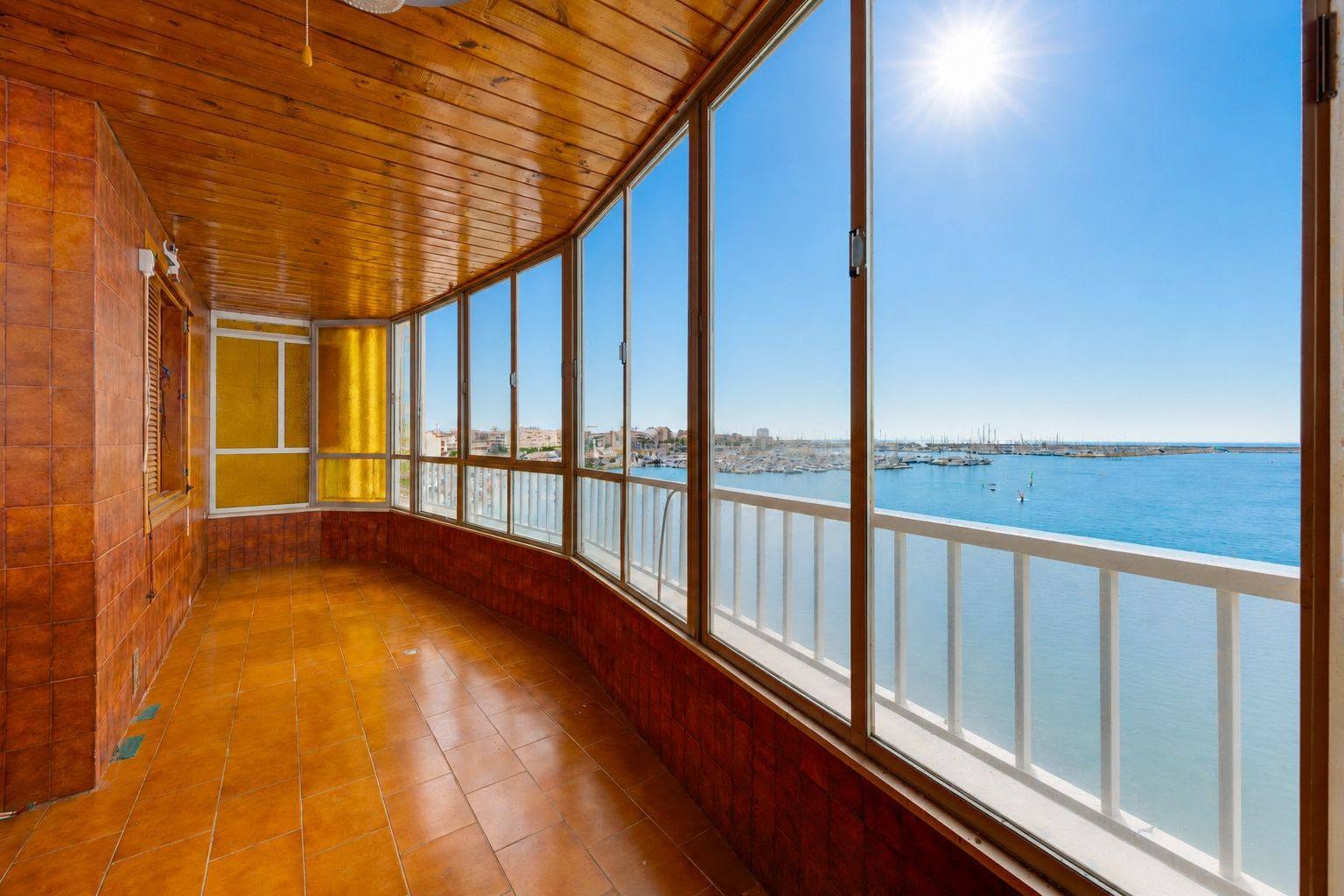
First-line apartment in Torrevieja, by Playa del Acequión
If being close to the sea matters most: this flat is on the front line in Torrevieja, next to Playa del Acequión beach. Photos and details are on the property page.
Sources
- Croatian Tax Administration: real estate transfer tax
- Costa Luz Lawyers: ITP in Spain 2026
- idealista: costs of buying a home in Spain
- Your Overseas Home: costs of buying property in Italy
- De Tullio Law Firm: cost of buying property in Italy
- Your Overseas Home: buying costs in Greece
- Sotheby’s Realty Greece: buyer advisory