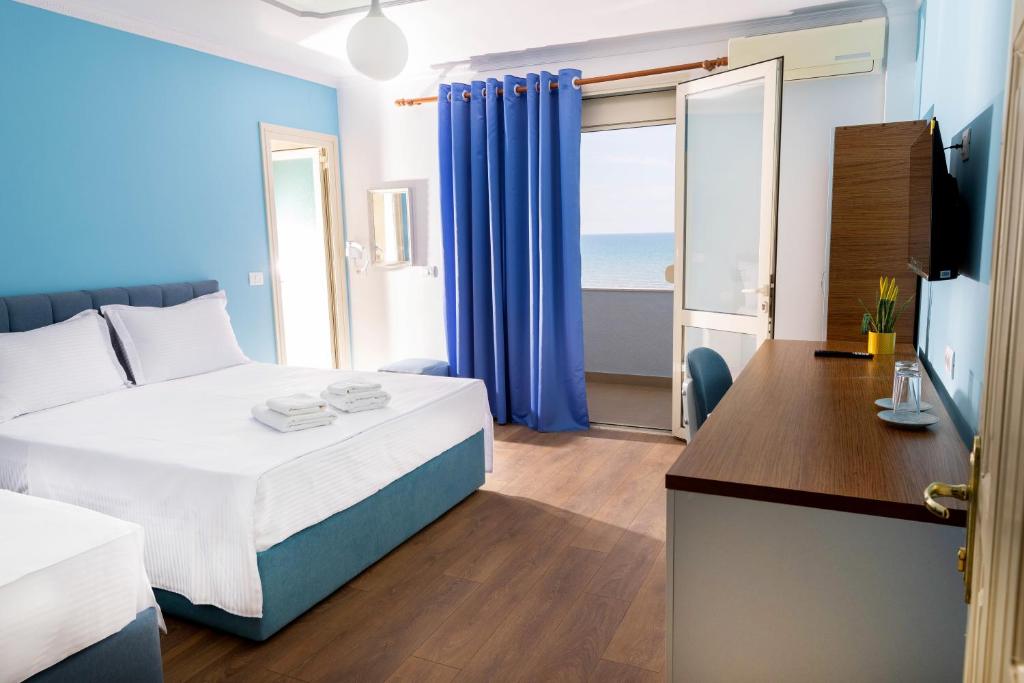
On a July evening on the Dalmatian coast, an apartment can earn several times as much per night as the same property in November. This is the number you see in listings. And it is the number you should never start from.
IN SHORT
- Listings show the best weeks. Start from the full year instead.
- Occupancy, operating cost, tax and financing decide the real result.
- Seasonality, resale and your own use change the picture more than the percentage does.
- Five written-down numbers give you a framework you can reuse for any coast.
The question of Mediterranean property yield has become more pressing in recent years. Listings tend to show the best weeks of the year. What they add less often is the rest: the running costs, the occupancy and the resale of a property can look very different once the season ends.
This article does not promise yield percentages. Instead, it shows the calculation framework you can use to form a realistic picture yourself, whichever stretch of coast it is.
Why the peak-season price is misleading
By its nature, the seasonal property market shows its best weeks. A well-located Mediterranean apartment is practically fully booked in July and August, and it earns a nightly rate that, on its own, makes it look like an excellent investment.
The problem is not that this figure is false. It is that it is incomplete.
The real question is never how much the peak week earns, but how many such weeks there are in a year, what happens in the rest, and how much it costs to maintain the property in all twelve months. A property with a higher yield on paper can easily prove a worse investment if it is highly seasonal, hard to operate, or hard to resell after a few years.
The full year as the basis
The only workable approach is the annual one. Here is what belongs in it.
Actual occupancy
What matters is not the length of the season, but how many nights of it you really let. A theoretical six-month season at 50 percent occupancy means three months of income, and that is quite a different starting point.
Occupancy is strongly affected by accessibility. A property forty minutes from an airport can run a much longer season than an equally beautiful one that is hard to reach. The presence or loss of a direct flight on a given route has a concrete effect on the booking calendar.
The real cost of operation
This is the item most calculations underestimate. It includes cleaning at each guest change, key handover or a key safe, garden care and pool maintenance, regular upkeep, insurance, and utility bills for the months when there are no guests.
If you are not on site, and typically you are not, you leave all of this to a local manager. A reliable property manager typically takes a significant share of the gross rental income. This is not a cost to avoid but a condition of operation: a badly managed property quickly loses value and reviews alike.
Taxes and regulation
Every country taxes a foreign owner’s rental income differently, and the details of double taxation treaties materially affect the net result. In addition, the rules for short-term rental have tightened significantly in several Mediterranean markets in recent years, in the form of permit requirements, registration numbers and municipal restrictions.
Never estimate this part. Ask specifically, for the particular town, before you buy.
Financing
If you buy with a loan, the repayment is part of the yield calculation. For property abroad, a higher down payment is typically expected, and conditions differ by country. Many buyers therefore pay in cash, which simplifies the process, but the lost alternative return must also be counted.
What the yield figure does not show
Three factors do not appear in the table, yet they decide whether buying was a good decision.
The depth of seasonality. Two properties with the same annual yield are not equivalent if one earns over eight months and the other earns the same in sixty days. The latter is far more fragile: one bad summer, a weather event or a cancelled flight hits it disproportionately hard.
Resale. Yield can be calculated on paper, but the exit cannot always be. On some stretches of coast, a good-quality property changes hands within months. Elsewhere it stays on the market for years. That difference is decided at the moment of purchase, not at the sale.
The value of your own use. If you use the property yourself, every week you spend there is lost rental income, but also a value that the yield table does not measure. It is worth quantifying consciously: what would the same few weeks cost in rented accommodation? The answer is often surprising, and it improves the overall picture.

A simple framework for the calculation
Before you decide on any specific property, ask these five questions, and write the answers down in numbers:
- How many nights will I realistically let in a year? Do not take the available maximum. Take a conservative estimate.
- What is the average nightly rate? Not the peak, but the average across the whole year.
- What is the total annual operating cost? Management, cleaning, maintenance, insurance, utilities, service charges.
- How much tax will I pay on the income? In the country concerned and at home.
- How much do I need to reinvest in the property each year to keep it in good condition?
If you cannot get a concrete answer to these from the seller or the intermediary, that is information in itself. A serious partner gives them, or says that they do not know and finds out.
The question behind the yield
Perhaps the most important change of recent years is that the line between a holiday home and an investment has blurred. Today’s buyer does not want to choose between the two. They look for a property they use themselves, and that earns money when they are not there.
This view rearranges the priorities. Suddenly the quality of the heating, the speed of the internet and how the town works in winter start to matter, none of which came up for a classic summer apartment. A property that can be lived in all year runs a longer season, holds its value longer, and if needed, can become a real second home.
Yield is therefore not a standalone measure. It is one dimension of the question of what you want to do with this property over the next ten years. For someone who can answer that honestly, the yield calculation is only a technical task.
The Azurian Coast approach
For the properties in the Azurian Coast portfolio, we always look at the full-year picture: realistic occupancy, local operating conditions, the regulatory environment and the possibility of exit. We do not show the best week. We show what follows from all 365 days of the year.
We work with only a few clients at a time, and we take the time to understand what the person who contacts us is really looking for. It is rarely exactly what they say in the first conversation.
If you are thinking about a Mediterranean seaside property and would like to see the numbers in their place, we are happy to start a conversation.
Frequently asked questions
What yield can realistically be achieved on a Mediterranean seaside property?
It depends so much on the location, the type of property and the quality of operation that any general figure would be misleading. Instead of looking for a percentage, calculate the annual income and the total costs for the specific property, using the framework above. The number you get is yours, and more reliable than any market average.
Is a Mediterranean property a better investment than one at Lake Balaton in Hungary?
It is different. Mediterranean coasts offer a longer season and international demand, but they are further away, more complex to operate, and work in a different legal environment. A Balaton property is closer and more familiar, but works with a shorter season. The decision depends on how much you want to use it yourself, and how much remote management you are willing to take on.
Do I have to hire a local manager?
If you rent it out regularly and do not live nearby, practically yes. Guest reception, cleaning, maintenance and problem handling need a local presence. The manager’s fee is not a loss but a condition of the income. The question is rather how to find a reliable partner.
How risky are the short-term rental rules?
Today this is the most important point to investigate. In several Mediterranean markets, permit conditions have tightened, and municipalities can also set their own restrictions. Check every investment calculation against the rules currently in force at local level, not against national practice.
When does it make sense to buy in cash?
Buying in cash is simpler, faster, and as a foreign buyer it often gives a stronger negotiating position. In return, you tie up capital, so you must also count the lost alternative return. For the decision, it is worth going through your own situation with an independent financial adviser.
What is the factor most people underestimate?
Upkeep. The coastal climate, with its salt, humidity and strong sun, works on a building faster than an inland one. A property that does not get reinvestment each year visibly loses quality within a few years, and with it its rentability and its price.
ONE PROPERTY FROM OUR LISTINGS
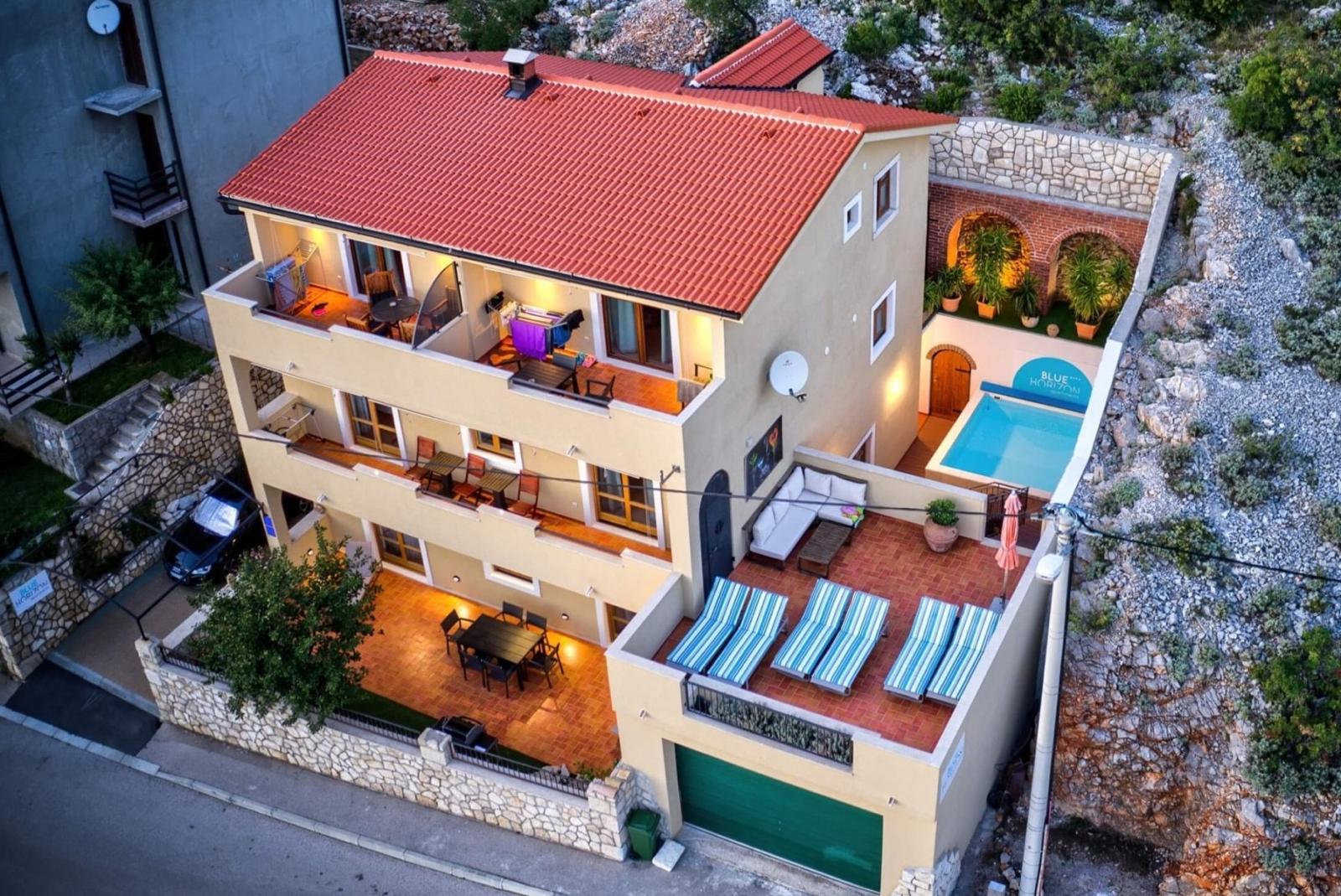
Apartment building in Senj, on the Croatian coast
If rental units matter to you: this house in Senj has apartments and guest rooms, with a saltwater pool. Photos and details are on the property page.